NOTE: Tis blog post is not my usual reflective kind of post. This week, I am using this blog post as a bit of an introduction and teaching about this season, the lectionary, and a new framework we are using during the summer months at Wellspring. This is detail that simply can’t be fully included in the sermon, so I am sharing it here.
The first two Sundays of Pentecost are meant to be a powerful leap into the longest and, for some, the most instructive season of the Christian year. On May 19, we celebrated Pentecost Sunday with our own Bishop Ruben Saenz, and we celebrated the power of the Holy Spirit poured into the disciples and all who follow Christ.
Then the second Sunday of the season, which we celebrated this past Sunday, May 26, known as Trinity Sunday, is where we shared how God comes to us as a relationship between Three (Trinity). We shared how we are invited into the relational dance with God thereby bringing a deeper understanding of what Dr. Jaime Clark-Soles, Professor of New Testament at Perkins School of Theology at SMU, calls the Quattrinity (the table of God where a place is set for us).
But the season following Pentecost … which some call the Season After Pentecost … is also called Ordinary Time. I like the use of the term “Ordinary Time” because it challenges us to see how God is at work in the “ordinariness” of everyday living, which if contemplated carefully, makes it extraordinary.
Many of you know that we use what is called the “lectionary” … which normally is the Revised Common Lectionary. The lectionary provides for us four readings each week during a three-year cycle from which we, at Wellspring, often choose two while letting the other texts speak into our planning and into the sermon itself. The readings are a reading from the Hebrew scripture (often known as the Old Testament), a Psalm (which, though found in Hebrew scripture, stands alone), a reading from the epistles in the New Testament (anything from Romans back through Revelation), and a reading from the gospels.
For the summer, however, we are not using the Revised Common Lectionary. We have decided to use a unique lectionary that is authored (with scripture translated) by the Rev. Dr. Wilda C. Gafney, who serves as the Right Rev. Sam B. Hulsey Professor of Hebrew Bible at Brite Divinity School at Texas Christian University in Fort Worth. Her lectionary is called A Women’s Lectionary for the Whole Church, and her theological framework is what is known as Womanist Theology.
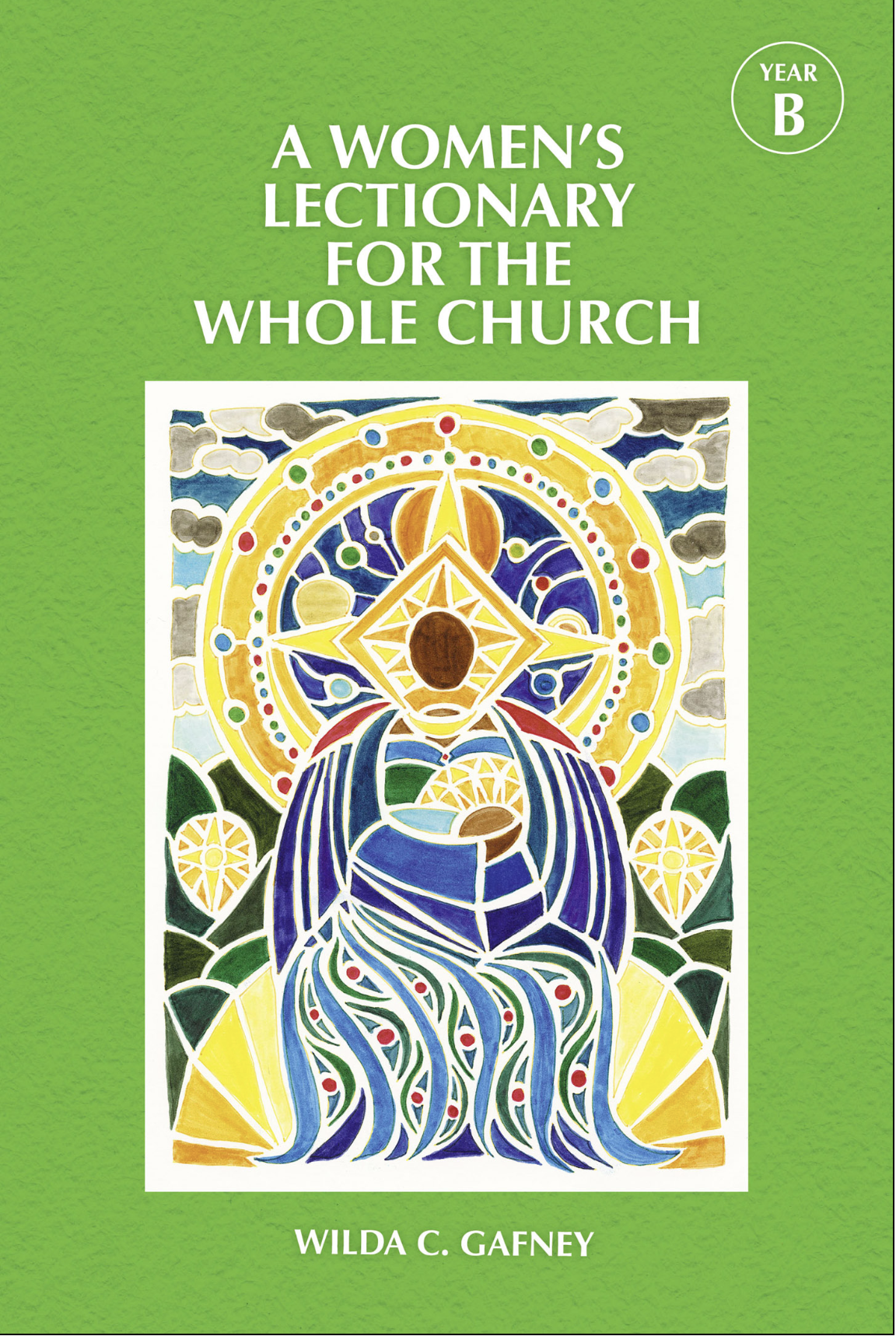
You may recall me saying that one of my two principal faculty members during my work on my Doctor of Ministry degree from Saint Paul School of Theology was the Rev. Dr. Emilie Townes, who first introduced me to womanist theology. It is a theological framework that can be challenging for a privileged, white male, yet, womanist theology has continued to show up in my writing, teaching, and preaching over the years.
Womanist theology takes the work of both Black Theology and Feminist Theology that helps us see God from the perspective of marginalized people. Womanism has at its root a principle that, when Black women are free, everyone else will experience liberation, as well. It asks of us to lay down our privilege and listen to the voice of the Black women, specifically African-American women, who teach us truths greater than we can ever imagine on our own.
So I invite you to join us in our worship this summer at Wellspring. You can join us either online or in person. My prayer is that you will be inspired by words that come through different voices, including the voice of a white male pastor who has been shaped, in part, by womanist theology and who continues to grow as we let the voices often found in the margins be heard first and loudest.
Then perhaps the ordinariness of summer might just become an extraordinary practice of the presence and power of the Holy Spirit of God!
 Reflections on Grace