Finding Calm in the Storm

On that day, when evening had come, he said to them, “Let us go across to the other side.” And leaving the crowd behind, they took him with them in the boat, just as he was. Other boats were with him. A great windstorm arose, and the waves beat into the boat, so that the boat was already being swamped. But he was in the stern, asleep on the cushion, and they woke him up and said to him, “Teacher, do you not care that we are perishing?” And waking up, he rebuked the wind and said to the sea, “Be silent! Be still!” Then the wind ceased, and there was a dead calm. He said to them, “Why are you afraid? Have you still no faith?” And they were filled with great fear and said to one another, “Who then is this, that even the wind and the sea obey him?” – Mark 4:35-41

I get where the disciples are coming from in this text. With all the turmoil, the fear, and the overwhelming dread and fear that is be fomented by our President and his slew of executive orders, many of which are threatening to upend much in our lives, it feels like the storm is upon us and the boat is taking on water.

For those who are in marginalized groups, whether they are Black, Indigenous, People of Color (BIPoC) or whether they are part of the LGBTQ+ community or any other threatened group, there is a great deal of dread over the marginalization that is a natural outflowing of the tenets of Christian Nationalism and the extreme right that seem to be dominating our national policy, if not outright destroying key aspects of our democracy.

The storm is raging, and the boat is taking on water. And we look to the One who is sent to save us, and he is asleep in the bow of the boat. I’m unsure what sleep looks like in a boat that is taking on water while being battered by the storm, but there is this almost eerie sense of calm about this One. When he awakens, he seems almost irritated that we awakened him for this emergency.

No sooner than he calms the seas, he turns to us and says, “Why are you afraid? Have you still no faith?”

But wait! Do we really have the capacity to do what Jesus did? Do we have the capacity to calm the stormy seas? Do we have the capacity to practice that kind of calm when our minds and our bodies are experiencing outright panic? What exactly is this faith that Jesus expects of his followers?

Since the first of the year, I have returned to a spiritual practice known as Centering Prayer. I use an app to guide me, and each day, there are options as to what Opening Prayer/Reading and what Closing Prayer/Reading will be part of the exercise. Then during the quiet time (known as the “sit” in contemplative practice), I am asked to choose a sacred word on which to focus.

The word I chose today was “calm.” This week, I received a request from one of the members of my flock who is personally threatened by these early executive orders. She was petitioning me to write something that would offer a word of hope even as she and so many others are experiencing panic in this time. That was what led to reflect on the word: Calm

Calm Is Not Denial

This calm is not a denial of the storm that swirls around us. It is not a denial of the panic that is fostered by fear or threat. Calm is the capacity to center ourselves right in the midst of the storm and somehow trust that the One who commands the wind and the waves is right here with us. It is to know that we are not alone and that we shall overcome … yes, even this storm.

How might I approach this turbulent, chaotic time if I believed that Jesus was within arms reach? How might we speak to the chaos and disorder all around us and command it to be still?

No, it doesn’t mean that we magically gain control over the oppressors or those perpetuating the harm. It doesn’t mean that the oppression immediately ceases. It does mean that, when we find our center and stand on the firm foundation on which Jesus stood, we will discover that we are not alone in the boat and that, through faith, we can weather any storm.

Calm as Nonviolent Resistance

When I think of resistance, I have this visceral reaction that feels like I should fight … fight with everything I’ve got. Yet this is not the way of nonviolence. The kind of calm that Jesus brought to his followers was not built on avoidance. Jesus continued to face his oppressors and enemies, yet he did so calmly. He was not anxious or afraid. Yes, he had his moment in the garden when he wished that the cup would pass from him, but then he calmly stood and walked with the soldiers who would lead him to his execution.

In the Sermon on the Mount in Matthew 5, Jesus talks about how to respond to oppression. “You have heard that it was said, ‘An eye for an eye and a tooth for a tooth.’ But I say to you: Do not resist an evildoer. But if anyone strikes you on the right cheek, turn the other also, and if anyone wants to sue you and take your shirt, give your coat as well, and if anyone forces you to go one mile, go also the second mile. Give to the one who asks of you, and do not refuse anyone who wants to borrow from you. (Matthew 5:38-42)

This is a subversive calmness. Walter Wink in a beautiful essay on The Third Way, offers us a way of seeing how turning our left cheek after having been struck on the right is to demand that we be treated as an equal without striking back. To give our coat after having been stripped of our shirt is to be naked (when we only wear two garments), which would mean that the person taking our shirt would be humiliated by our own nakedness. To go the second mile, according to Roman military law, would place the solder whose pack you were carrying in serious trouble with his superiors.

It is a calmness, says Wink, that is neither passive nor violent … it is a calmness that is a third way of being in the world.

So maybe that’s where Jesus is as he sleeps in the boat in the midst of the storm. He is neither afraid nor violent, he is practicing a centered calm that becomes then the calmness to which his followers are called.

It is that calmness that is born of a faith that, when the storms are tough, God is, in fact, right there with us. All we have to do is calmly reach out our hand to the One who saves, and we, too, will be those who then turn to calm the seas in the midst of the storm.

The Goodness of God

I heard it in worship last week. It is one of those songs that Leah and I listen to frequently. The version we listen to on our phones is recorded by CeCe Winans. It is The Goodness of God. When the band does it, it is often sung by Becky Ash who is a strong mezzo, and she just brings it home.

Goodness.

In this Sunday’s text (Mark 10:17-41), a man with a great deal of wealth runs up to Jesus, and as he kneels before Jesus, he says, “Good Teacher, what must I do to inherit eternal life?” Jesus then engages him with a question, “Why do you call me good? No one is good but God alone.”

The sermon this Sunday deals with the rest of the story, but I have chosen to use my blog to flesh out a thought that I have about goodness.

Theologians, priests, and pastors have grappled with this text almost from the beginning, and the conversation is deeper and more nuanced than we might think. Is Jesus saying that God is exclusively good and everything else is bad? That would be the basis for understanding original sin.

It certainly can be used to talk about the divinity of Jesus, which would mean that the rich man did not misspeak, but rather he identified Jesus as God. Is this Jesus’s affirmation of that statement? This would certainly fall in line with orthodoxy and the claims of the historic creeds of the church.

Is Jesus saying that the man is wrong, and that Jesus himself is humble and not to be confused with God? That would be a very humanist approach, and few Christians proclaiming this text would go that direction.

I wonder, however, if Jesus might be talking about a goodness of God that is intended to be shared. It is that very goodness that is blended with love, which together becomes the foundation for all creation. It is a gift that is given to all and is not exclusive only to God. It is a goodness that is to be shared.

You see, Jesus is not as orthodox as many of his followers … then and now … would wish him to be. Jesus is not about original sin. According to theologian Matthew Fox, the story of our faith is based on “original blessing” and not original sin. Jesus teaches that very thing. Jesus is about children and those whom he calls “little ones” (read the rest of Mark 10), and Jesus warns us what happens when we try to enter the realm of God with anything other than childlike wonder and awe.

Interestingly, Jesus ties goodness to some key things in this passage. Those who want to experience the goodness of God are called to renounce the idolatry of wealth, privilege, power, and demagogues who peddle sin and call it good. We are called to live as children with complete trust in Christ.

We are then called to embody Christ, which is to say that, like Jesus, we are called to embody God. And when we give ourselves to the full embodiment of Christ in this world, then my friends, we will have experienced the goodness of God.

So if you haven’t clicked the link above, I invite you to click it here and spend a moment hearing from CeCe Winans about the Goodness of God.

Encountering the Mystery of Death

As we said goodbye to my mother-in-law this week, it hit me that we are only one month shy of ten years since my own mother died. My mother-in-law was a second mom to me. It was hard for us to say goodbye to her, and it was hard to think that this 92-year-old whom we thought would live forever was now gone from us. So we started again the journey of grief.

Death is hard.

Death is hard because it creates a vacuum … it sucks something out of our souls as we move deeper into grief. Sometimes it is as if the hole dug in our hearts is a bottomless pit. Even though I know that this vacuum in our souls is what ultimately deepens our souls and can lead to greater wisdom, the pain and suffering of the journey is not lessened by that hope.

Death is hard because it seems like it is the last word in our lives. We don’t truly know what is next beyond this human life, and we, who are people of faith … who believe that the resurrection is the gift given to all … still struggle to make sense of what is to come. So we create images of reunions and beautiful vistas and streets paved with gold in our search for comfort and meaning.

I was asked by one who grieves, “What if this is actually just the end? What if death is the final thing and there really is nothing more?” It caught me short, and all I could do was offer a hug. In our embrace, I shared that we live by the promise that God is with us and that we are not alone. That, yes, life always finally yields to death, but our proclamation is that death will finally yield to resurrection.

The Wisdom Pattern

It is what Richard Rohr calls the “wisdom pattern.” It is the way of the universe. It is the pattern of order, disorder, and reorder … construction, deconstruction, and reconstruction … life, death, and resurrection.

We live in a universe where we once thought black holes only bring death as they draw in stars and galaxies and planets bringing them to their own demise. But then our advanced space telescopes suddenly reveal evidence that the largest black holes are actually giving birth to stars and whole galaxies. In the great vacuum of the universe, what we thought only as a bringer of death becomes a giver of life.

The signs of this wisdom pattern are all around us. Each year, the giant red oak tree in our front yard sits alive and beautiful providing lush green in full view of where I am currently sitting. She produces acorns that, if not gathered up, provide new growth around her. Her leaves turn a beautiful yellow and orange each November and December, and as the winter sets in upon us, she looks as if she has died. Her sap has returned to the roots, and there are moments after a hard winter when we wonder if that sap might not rise again. Then the sap begins to flow and the leaves open and spread their pollen across the landscape once more.

The Mystery of Divine Love

So no, it is not ours to know what comes next, but what Jesus promised us was the abiding presence of a loving God. The mystics say that it was the love of God that set the universe in motion. It is the love of God that moves through every phase of all evolutionary cycles. It is the love of God that gave us birth, and it is the love of a God who dares to die our death with this proclamation that, even in that darkness, we are not alone.

I do not know what comes next. Death is finally a mystery that is not mine to explain. But I do know that love is what connects us in our grief … love is what is poured out in our mourning … and love is finally that thing that is bigger than this life here on this tiny planet. It is a love that is beyond time. Paul says it well: “Love never ends.”

It is finally that love of God that will not fail us and that will not let death be the final word.

You see, love is at the root of the mystery of life … the mystery of death … and the mystery of resurrection. So when we encounter mystery and cannot see beyond the darkness, we then yield ourselves to a God who holds us in a loving embrace … who meets us in our dying and invites us into the carriage of a love that has no end.

This is the gift of resurrection!

The Path Toward a Greater Unity

When clergy in the Methodist tradition are ordained, there are many questions that are asked. In the tradition begun by John Wesley, we meet in the Clergy Executive Session either prior to or at the beginning of the gathering of the Annual Conference and we consider and approve what is known as the Business of the Annual Conference (concerning clergy matters).

The format of this meeting is question and answer as we consider, among many things, who have been approved as candidates, who are coming for commissioning or ordination, who have who have surrendered ministerial credentials or had their ministerial credentials revoked, who have retired, and who have died.

Then there are the questions asked of those being commissioned and ordained. It is an examination that comes straight from John Wesley’s own words used to examine those being ordained.

Among them is THE QUESTION:

Are you going on to perfection?

The only pathway to ordination is to answer in the affirmative, and yet the true answer to this question is found only in a lifetime of faith and learning. The question, you see, is not about being flawless or without sin. By sin, I am using the Greek αμαρτία (hamartia), which means “missing the mark.” Christian perfection is more about wholeness and vitality than it is about being flawless or without sin.

The mystics use the phrase “unitive consciousness” to describe this idea of perfection. This includes mystics from many religious traditions, and it is what has helped Christian mystics add a greater depth to this idea of Christian Perfection.

It Comes Through Both Action and Contemplation

In Albuquerque, New Mexico, is where we find the Center for Action and Contemplation. This is a center founded by Fr. Richard Rohr, the Franciscan priest, who believes that the notions of Christian Action and Christian Contemplation cannot be divorced from each other.

Fr. Rohr has written extensively, and many people in my congregation read his work on a regular basis. His epic work, The Universal Christ, was foundational for me as I began to see more clearly (even as I was well into my 50’s) that this notion of Christian Perfection … unitive consciousness … begins in both action and contemplation.

We are called to engage injustice in our world … we are called to stand with those in the margins …. we are called to speak truth to power.

Yet we are also called to sit quietly and just see … see where God is at work in the world … see how Christ is found in “the least of these” … see the Christ who is in every single person (even in those who tend to cover up the Christ in them with a veil of evil around them).

It is to see Christ in every single part of creation and to let the Christ in us connect to the Christ in others.

And when we have discovered Christ in others … when we see Christ in God’s created universe … then we will have taken a step toward this unitive consciousness, and we will have taken a step toward perfection.

Perfected in Love

Wesley’s understanding of the doctrine of Christian Perfection was based in his understanding of love. The journey toward perfection was using love as the supreme act of faith. It is the love we know as αγάπη (agape), and it is an ultimate letting go of self. It is moving from an egoic sense of self to what we know in mysticism and psychology as “the true self” or “the authentic self.”

It is that true self that can see and love the Christ in the other. It is that true self that can even love even the enemy.

So I believe this is a question not just for the clergy. It is a question for all of us: Are you going on to perfection?

The last stanza of Charles Wesley’s great hymn of praise, Love Divine All Loves Excelling, ends with an aspirational word of hope that is foundation for this understanding of Christian Perfection. I have sung this hymn for a lifetime, yet each time I read or sing these words, I am reminded of the journey to which I am called. It is the path to a greater unity.

Finish, then, thy new creation;
pure and spotless let us be;
let us see thy great salvation
perfectly restored in thee:
changed from glory into glory,
till in heaven we take our place,
till we cast our crowns before thee,
lost in wonder, love and praise.

You are invited to journey with me as we seek this wholeness and unity in Christ. It is a unity that the world so desperately needs in this very moment.

What God Can Do With a Remnant

Remnants. Small amounts of leftovers after the greater part has been consumed or lost.

Following the delayed 2020 General Conference held in 2024, it is clear that the losses we have experienced among the United Methodist Conferences in the southern US has led to stark reductions reductions in our general budget for the whole denomination, which means that we have had to be creative about funding conferences and leadership.

In many ways, we were left with a remnant in a smaller denomination. Interestingly, the loss of those who had become detractors and (often untruthful) critics of the UMC led to a much higher energy and a greater focus on justice and inclusiveness. At the recent General Conference, we saw the elimination of the harmful language in our Discipline that marginalized our LGBTQ+ siblings. We saw the movement toward regionalization, which offers a greater equity across our global denomination. Finally, the Social Principles have been revised to address how we live out justice, equity, and inclusion in powerful new ways.

In Isaiah 11:10-11, we read: On that day the root of Jesse shall stand as a signal to the peoples; the nations shall inquire of him, and his dwelling shall be glorious. On that day the Lord will again raise up and recover the remnant that is left of God’s people, from [all the lands to which they were dispersed].

God will then use this remnant to change the world.

The remnant is alive and active!

As I write this, I am at the South Central Jurisdictional Conference of the United Methodist Church in Rogers, Arkansas. Yesterday, I watched as the delegates approved the work of unification to create the new Horizon Texas Annual Conference to which Wellspring now belongs. As one who worked for three solid months on this project along with many others, it was a joy to be present to see this come to fruition.

The Episcopal Address, offered by Bishop Cynthia Fierro Harvey (who serves as the bishop of the Texas Annual Conference and now the Rio Texas Conference), focused us on the power of the mustard seed that, despite its smallness, can grow into a massive tree. She had us sing the first verse of Hymn of Promise, that speaks of a seed that is planted and sown by us even with the knowledge that its growth will be “unrevealed until its season, something God alone can see.”

She also reflected on a sermon by our Native American bishop, Bishop David Wilson, who shared that our work is with our sights set on seven generations … for people we will never know and who may never know about us.

I know about seven generations in my own family. My great-great-grandfather bought a 250-pound anvil … yes, a blacksmith’s anvil … that he then determined would be passed down to the firstborn male Smith in each generation. When our son and daughter-in-law found out that they were having a son, they got us on a video call and said, “Dad, we have a new heir to the anvil.”

My grandson is the seventh generation to inherit the 250-pound behemoth that now sits in my garage, and I now know that seven generations spans at least 153 years.

So our work is to take this remnant … this seed … of a church that we now have and plant it in such a way that it will bear abundant fruit for the next 153 years.

Moving Forward

With the historic votes taken at our General Conference, there are many who have felt the sense of accomplishment. Those who have been part of the Reconciling Movement were ecstatic about removing the discriminatory language from the Discipline, and it is easy to think our work here is done.

One of the first people I encountered at the SCJ Conference was Laura Young, who is the South Central Jurisdictional Organizer for Reconciling Ministries Network. I had not had a chance to see her since the historic General Conference, and we both celebrate the work that was done there. But she is clear that the work of the historic General Conference is just the beginning. She said, “The decision of the General Conference was a significant milestone, but we can only party like it is 1972. It is a milestone to be celebrated, but we need to work to build a church that offers safety, protection, and affirmation for our LGBTQ+ siblings. Our work continues on.”

As a remnant of faithful United Methodists, our job is to continue building the church where we see Christ in every single person and every single thing. Ours is a task of advocacy for those who are in the margins. Ours is a task to hear the voices of fear and doubt on all sides of our struggles and to offer the words of Christ: “Do not worry. Do not be afraid.”

This Jurisdictional Conference is also a reminder of how God tends to use remnants throughout the bible to create a stronger, more faithful witness. I am inspired by the work of the United Methodist Church. The remnant is rising up, moving forward, and working to bring Christ into the world in powerful new ways.

I am blessed to be part of the remnant.

When the Ordinary Becomes Extraordinary

NOTE: Tis blog post is not my usual reflective kind of post. This week, I am using this blog post as a bit of an introduction and teaching about this season, the lectionary, and a new framework we are using during the summer months at Wellspring. This is detail that simply can’t be fully included in the sermon, so I am sharing it here.

The first two Sundays of Pentecost are meant to be a powerful leap into the longest and, for some, the most instructive season of the Christian year. On May 19, we celebrated Pentecost Sunday with our own Bishop Ruben Saenz, and we celebrated the power of the Holy Spirit poured into the disciples and all who follow Christ.

Then the second Sunday of the season, which we celebrated this past Sunday, May 26, known as Trinity Sunday, is where we shared how God comes to us as a relationship between Three (Trinity). We shared how we are invited into the relational dance with God thereby bringing a deeper understanding of what Dr. Jaime Clark-Soles, Professor of New Testament at Perkins School of Theology at SMU, calls the Quattrinity (the table of God where a place is set for us).

But the season following Pentecost … which some call the Season After Pentecost … is also called Ordinary Time. I like the use of the term “Ordinary Time” because it challenges us to see how God is at work in the “ordinariness” of everyday living, which if contemplated carefully, makes it extraordinary.

Many of you know that we use what is called the “lectionary” … which normally is the Revised Common Lectionary. The lectionary provides for us four readings each week during a three-year cycle from which we, at Wellspring, often choose two while letting the other texts speak into our planning and into the sermon itself. The readings are a reading from the Hebrew scripture (often known as the Old Testament), a Psalm (which, though found in Hebrew scripture, stands alone), a reading from the epistles in the New Testament (anything from Romans back through Revelation), and a reading from the gospels.

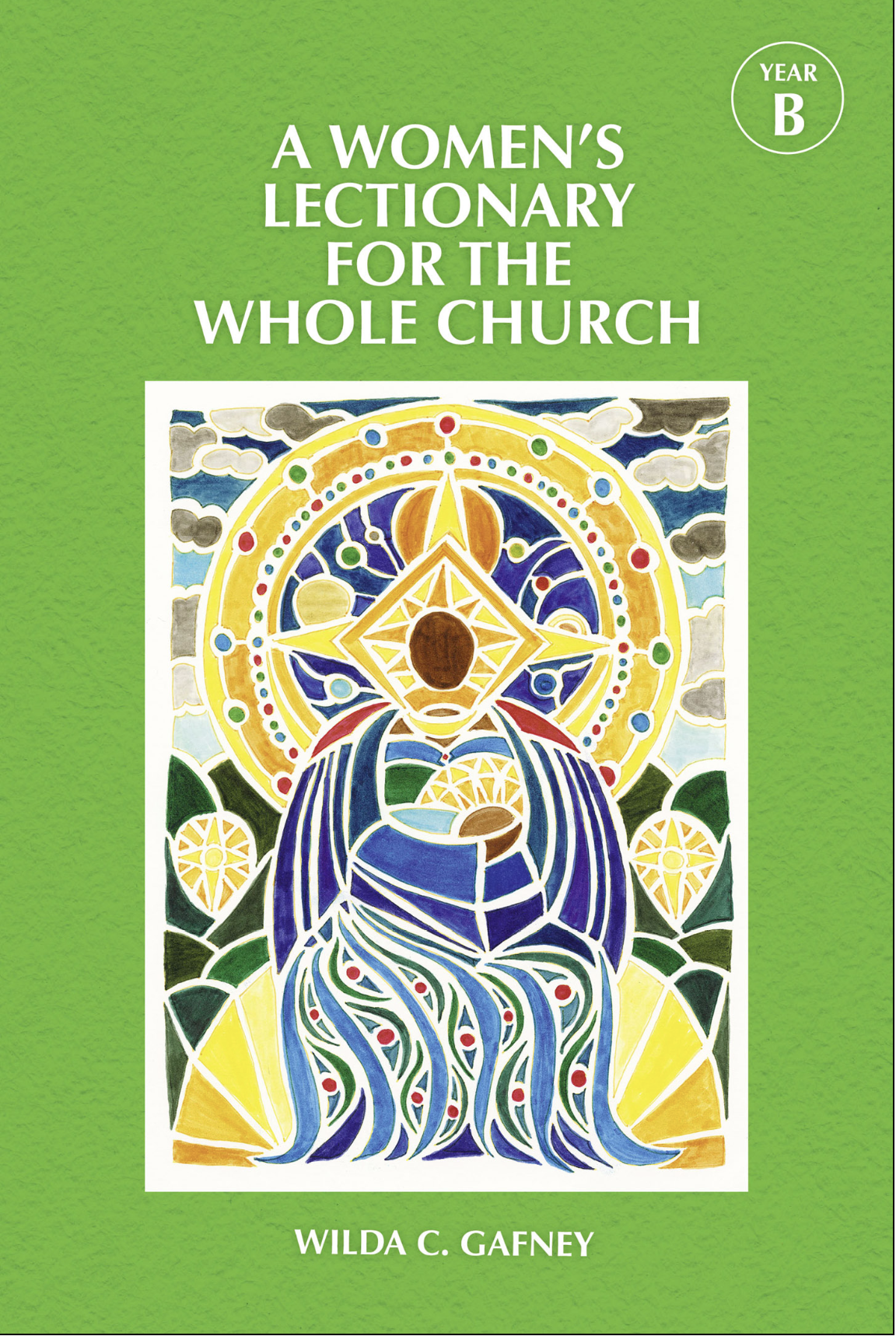
For the summer, however, we are not using the Revised Common Lectionary. We have decided to use a unique lectionary that is authored (with scripture translated) by the Rev. Dr. Wilda C. Gafney, who serves as the Right Rev. Sam B. Hulsey Professor of Hebrew Bible at Brite Divinity School at Texas Christian University in Fort Worth. Her lectionary is called A Women’s Lectionary for the Whole Church, and her theological framework is what is known as Womanist Theology.

You may recall me saying that one of my two principal faculty members during my work on my Doctor of Ministry degree from Saint Paul School of Theology was the Rev. Dr. Emilie Townes, who first introduced me to womanist theology. It is a theological framework that can be challenging for a privileged, white male, yet, womanist theology has continued to show up in my writing, teaching, and preaching over the years.

Womanist theology takes the work of both Black Theology and Feminist Theology that helps us see God from the perspective of marginalized people. Womanism has at its root a principle that, when Black women are free, everyone else will experience liberation, as well. It asks of us to lay down our privilege and listen to the voice of the Black women, specifically African-American women, who teach us truths greater than we can ever imagine on our own.

So I invite you to join us in our worship this summer at Wellspring. You can join us either online or in person. My prayer is that you will be inspired by words that come through different voices, including the voice of a white male pastor who has been shaped, in part, by womanist theology and who continues to grow as we let the voices often found in the margins be heard first and loudest.

Then perhaps the ordinariness of summer might just become an extraordinary practice of the presence and power of the Holy Spirit of God!

General Conference Matters

What We Do Matters

NOTE: I am blogging more frequently during the 2024 General Conference, as I did in 2019. These are only my reflections, and in no way are they comprehensive. To keep up with happenings of the UMC General Conference, I invite you to stay connected HERE.

In 1986, my father, Kenneth Smith, was elected serve as the Lay Leader of the Central Texas Conference. He was elected to serve two years because our conference, for years, had ben out of step with the quadrennial cycle of the United Methodist Church. We were changing our Lay Leaders exactly between General Conferences, and there were limitations as to our effectiveness by doing so. My dad agreed that he would do well with the two year cycle.

Because of his visibility to the members of the annual conference, he was elected as the first lay member of our General Conference delegation in a year when the first elected lay person was the chairperson of the delegation. I had just been ordained as a (transitional) deacon, the year before my father’s election, and I was excited to join him as an observer/guest at the 1988 General Conference in St. Louise, MO.

That’s when I knew that General Conference matters. While there was much camaraderie with celebration, there was always this uneasy tension around the issue of human sexuality. Those who have heard my story about Mark, my best friend in high school, will know that it was during this time that I was on a journey toward greater understanding of homosexuality … later LGBTQ+ concerns.

The 1988 General Conference felt good in many ways that year, but I felt the hardness around excluding people. Then the last two weeks burst upon us and I can tell you that NO PREVIOUS GENERAL CONFERENCE OF THE UNITED METHODIST CHURCH CAN COMPARE WITH THE POSTPONED 2020 GENERAL CONFERENCE HAPPENING IN 2024!

It was in the first regular session of the General Conference of the newly formed United Methodist Church in 1972 where the language was inserted into our Social Principles in the Book of Discipline: “The United Methodist Church does not condone the practice of homosexuality and considers this practice incompatible with Christian teaching.” That was the capstone upon which all of the other restrictive, harmful legislation was written quadrennium after quadrennium.

After 52 years of living through General Conferences where the knifes of separation and exclusion continued to cut deeper and deeper, this capstone statement has now been removed from our Social Principles, and the giant arch of heterosexism has fallen! The newly revised social principles were approved yesterday.

Not only did we remove that harmful capstone statement, we ADDED the following: “Within the church, we affirm marriage as a sacred, lifelong covenant that brings two people of faith, an adult man and woman of consenting age, or two adult persons of consenting age, into union with one another and into deeper relationship with God and the religious community.”

And as the General Conference continued to break down barriers and to build up fresh expressions for how a newly revised United Methodist Church will move forward, we have had other developments that shrink the distance between us.

Two significant steps had to do with the Order of Deacons and how we are called (even in our financial life) to seek justice.

Deacons are, in fact, ordained clergy who, from the birth of that separate order in the United Methodist Church in 1996, have been restricted from sacramental authority. The General Conference has seen how sacramental authority (consecrating the elements of holy communion and officiating baptisms) is essential to build up the church and our witness in the world. Our own Deacon, Pastor Jessica, will share her thoughts within the next 2-3 days on her blog linked HERE.

Addressing racism, sexism, colonialism and patriarchy. While I was unable to write down the specific motion to amend, a delegate rose to add to the report of our General Council on Finance and Administration that the United Methodist Church will fund ministries of justice that break down racism, sexism, colonialism, and patriarchy.. This moves us toward being a more justice-seeking denomination.

While the church is still grappling with the financial losses due to disaffiliations and unrest, the spirit of hope is alive, and the Holy Spirit is leading us as a denomination to a new day. It is a new day based, not on who we can exclude, but on how we draw the circle wide. It is a new day founded on the powerful love of God.

Today, in the last morning of worship for this General Conference, we heard a powerful message from Bishop Tracy Malone, who serves as resident bishop of the East Ohio Annual Conference, and then at the end of worship, the band started singing Love Train.

People around the world, join hands! Start a Love Train! A Love Train!

And as they sang this same refrain over and over, people held hands. Then they began dancing in place. Then they moved out into the aisles and … you guessed it … formed a love train.

What we do at Annual Conference matters, and when we do it well, the Love Train is formed. So I end with the invitation for you to witness the joy that was shared in that moment RIGHT HERE!

What we do as a church matters! You matter! All those who have been excluded and marginalized matter. And when everyone matters, the world will never be the same!

General Conference Matters

Praise and Lament

NOTE: I am blogging more frequently during the 2024 General Conference, as I did in 2019. These are only my reflections, and in no way are they comprehensive. To keep up with happenings of the UMC General Conference, I invite you to stay connected HERE.

Last evening, I paused to pray and celebrate all that had happened in the work of the General Conference yesterday. We have indeed become a more inclusive denomination, and a new day is indeed dawning. When I awoke this morning, however, I was experiencing something that felt like sadness. I suppose it could have been the storms that passed through the night or the gray morning awaiting me outside.

Ultimately, I realized it was something else.

One of the people who reached out to me via social media concerning yesterday’s blog post was a longtime friend of mine. The Reverend Karen Greenwaldt was appointed from 1981 to 2013 to the General Board of Discipleship (later known ad Discipleship Ministries) in Nashville, and she served the last 13 years as the General Secretary. She offered a celebratory comment to my post linking yesterday’s blog post. When I read it, my heart leapt with the joy and gratitude at my 40+ year relationship with Karen, but it also skipped a beat as I immediately thought about all the years we have lived in the storm.

Karen was one who worked tirelessly to create a denomination that discipled people without regard to the color of their skin, where they called home, who they were, or who they loved. She led with integrity and grace, and every year at Annual Conference, I could hardly wait to see and hug my friend who so boldly led one of our general agencies through some challenging times.

Additionally, Karen was the first women to be ordained a deacon and an elder in the Central Texas Conference of the United Methodist Church. In a day when churches still so often rejected female clergy leadership, Karen was a trailblazer. She served for years as our Director of the Conference Council on Ministry in our conference office. She is one who advanced the causes of female clergy leadership. She is one who fought to defeat the harmful language being consistently added to our Book of Discipline every time the General Conference met. She lived with the tension of being an executive leader in a denomination that did not always share her inclusive worldview. In her retirement, she has remained an advocate for change.

As I let the darkness of the morning settle in on me, I went deeper to that place of lament. As I thought of those, like Karen, who continued to build an inclusive church while swimming upstream against a strong current of exclusive fundamentalism.

I lament how the Church of Jesus Christ, through her history has spent a great deal of her energies (mostly under the leadership of white men from western cultures) marginalizing those who were not white, western males. I lament how we have attempted to silence the voices of women, LGBTQ+ persons, BIPOC persons, and people who have differing abilities.

For those who have worked to get us to this place … for those who have suffered and been harmed just for being who you are and who you love … for those who have stood in the gap at the risk of personal loss and great stress … for those who have advocated for justice even when denominational leadership asked you to stop … WE SEE YOU!

We hold within us both the lament of the ways you have suffered in the past and the celebration of the new day you have helped create!

As we move into the new reality that this General Conference is creating for us, I pause for this prayer:

Holy God who has walked with us in darkness: We come with the realization that the church itself has sinned and fallen short of your glory. We come with the realization that our actions and inactions, our words and our complicit silence have often been the source of harm, exclusion, and even death. We come with the realization that the time is now to open a new chapter of transformational love.
Hear us when we pray!
Loving God who provides pathways forward: We celebrate the new day that has dawned in the United Methodist Church. We celebrate the new vision as we climb ever higher to see over the mountaintop to the kin-dom of your radically inclusive love.
Guide us as we pray!
Surprising God, who dances with us in gratitude and celebration: We offer gratitude for the giants on whose shoulders we stand. We give praise as we watch walls of division crumble before our eyes. May we enjoin your dance even when we don’t know the steps. May we trust your Holy Spirit, through which we live and move and dance and have our being, to take the lead and teach us the dance of redeeming love.
Take our hands, O God, and lead us to the dance floor of your grace and love!
Amen.

General Conference Matters

A New Day Has Dawned

NOTE: I am blogging more frequently during the 2024 General Conference, as I did in 2019. These are only my reflections, and in no way are they comprehensive. To keep up with happenings of the UMC General Conference, I invite you to stay connected HERE.

Unity! That is the primary theme that has been spoken throughout the gathering of the delayed 2020 General Conference held in 2024. Last week, all work was completed in the legislative committees, and this week, the General Conference has been convened in plenary sessions (with all members of the General Conference voting on all matters).

It is often hard to follow with the strict use of Roberts Rules of Order, Consent Calendars, and stand alone Calendar Items, but what is happening is that the United Methodist Church is slowly, vote by vote, reclaiming our aspirational identity as the the church with “Open Hearts. Open Minds. Open Doors” (a previous slogan of the UMC).

We have taken the first big step toward regionalization. We have revised our Social Principles to take out the language that previously stated that homosexuality was incompatible with Christian teaching. We have taken strides to be the denomination that draws the circle wide. We are a denomination that is becoming the inclusive church we long to be.

In today’s Consent Calendars, we removed bans on the ordination of gay clergy or the consecration of gay bishops. We removed bans that would prohibit funding to causes that supported LGBTQ+ rights, and we categorically have restored to full fellowship those who had previously been marginalized by our church law.

Also buried in the legislation known as a Consent Calendar was legislation titled Petition 20717-HS-¶419.12-G. This altered language in our Book of Discipline around superintendency stating the following:

Add new subparagraphs after ¶ 419.12:
13. The superintendent shall not penalize any clergy for performing, or refraining from performing, a same-sex marriage service.
14. The superintendent shall neither require any local church to hold or prohibit a local church from holding a same-sex marriage service on property owned by a local church.

This part is big. Some may not be aware that, from the time marriage between same-gendered couples was made legal, our clergy have been prohibited from performing (or even blessing) those marriages. Additionally, our churches were forbidden from having those same marriages in their buildings. To do so would bring ecclesial charges, which for the clergy could have led to suspension or loss of credentials.

The time has come, my friends, when we are truly becoming an inclusive denomination. Gone are the days that I have to tell anyone that I cannot officiate their wedding because of who they love. Gone are the days when these same beautiful people would be turned away from having their weddings in a church. Gone are the days when we have to be discreet about outing our colleagues who had come out to us as gay. Gone are the days when we HARM OR MARGINALIZE ANYONE FOR BEING WHO THEY ARE OR LOVING WHO THEY LOVE!

Today is a new day in the United Methodist Church, and God has richly blessed us with a renewed sense of unity, revitalization, and a profound love that will change the world.

A New Day Has Dawned!

General Conference Matters

In the Right Place

NOTE: I am blogging more frequently during the 2024 General Conference, as I did in 2019. These are only my reflections, and in no way are they comprehensive. To keep up with happenings of the UMC General Conference, I invite you to stay connected HERE.

General Conference opened today with all the pomp and circumstance expected of a gathering such as this. Opening worship included the grand procession of the Council of Bishops, and the opening worship service reminded us that we belong to a global communion.

At the outset of the General Conference, we heard from Bishop Thomas Bickerton (whom I have had the chance to see in several Zoom calls seeking to hold the church together through the recent schism), and his words were firm.

Bishop Bickerton began by asking some pointed questions and then challenging those who would continue to attack the denomination:

“Are you committed to the revitalization of the United Methodist Church? Are you here to work for a culture marked by compassion, courage, and companionship?” He then continued, “If you can’t agree to that, what are you doing here anyway? Maybe, just maybe, you’re in the wrong place.”

He went directly at our detractors by saying, “Don’t you tell us that we don’t believe in Scripture. Don’t you tell us that we don’t believe in the doctrine of the church. And Lord have mercy, don’t tell us that we don’t believe in the resurrection of Jesus Christ.”

He then issued the challenge to those in gathered for the General Conference: “We have got to rebuild the church and we’ve got to do it together.”

Bishop Bickerton spoke aloud what so many of us have thought during the past several years concerning people whose sole aim is to destroy the denomination I have spent my life serving. His statement aimed at the detractors still rings in my ears: “”Maybe you are in the wrong place!”

But for those of us who are working to bring renewal to the church … those who are working to build a radically inclusive church that has a place at the table for every single person … for those who are working toward a church that takes a frontline role in seeking justice for those who have been harmed by the church whether through exclusion and hate or whether through colonial marginalization … WE ARE IN THE RIGHT PLACE!

My prayer is that the decisions being made by the delegates from all around the globe will seek this unique kind of unity … a unity that builds up where others seek only to tear down … a unity that respects diversity and invites people into holy conversations around our differences … a unity that demonstrates to the world that we ARE the body of the living Christ in all that we do.

We are in the right place for Christ to rebuild the church, and that is my hope for this General Conference. Thank you, Bishop Bickerton, for being in the right place at the right time!